

Buyers say they'll wait for prices to fall. Vendors say they'll wait for prices to rise. And plenty of agents quietly decide that if nobody wants to move, they might as well wait too. That's exactly when a real estate agent weekly routine stops being a nice idea and becomes the thing that keeps your business alive.
It's not an effort problem. It's a structure problem. In a good market, the phone tells you who to call. In a quiet one, nothing does, so you have to invent a reason to reach out, day after day.
This blog breaks down the rhythm Josh Phegan lays out in What to Do When Markets Shift: A weekly rhythm for a slower market. It covers how top agents structure the week, where it still breaks down, and what changes when the list behind it is reliable.
How top agents build a real estate agent weekly routine
Top agents give each day a job, so the work doesn't depend on their mood. It comes down to three habits. 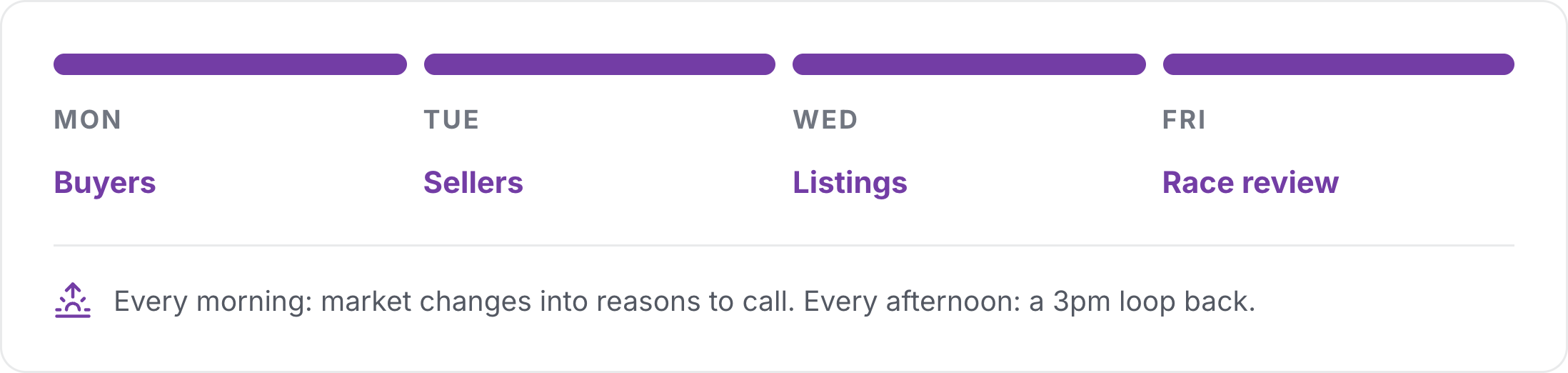
-
Monday is buyers, Tuesday is sellers
Monday, build a hit list of buyers who have to buy by a date: a relocation, finance approval running out, a home already sold. Then prospect for what they want. If three buyers need a three-bedroom home at $1,000,000, go looking for three-bedroom homes at that price. Walking into a listing presentation with three named buyers beats talking up your database.
Tuesday, reread your appraisals and past clients and sort them by reason to sell: a baby, a job move, financial pressure, a deceased estate. For each one, ask what they'd need to see or feel to move now. That question turns a list of names into a list of conversations.
-
Wednesday is listings, Friday is the race review
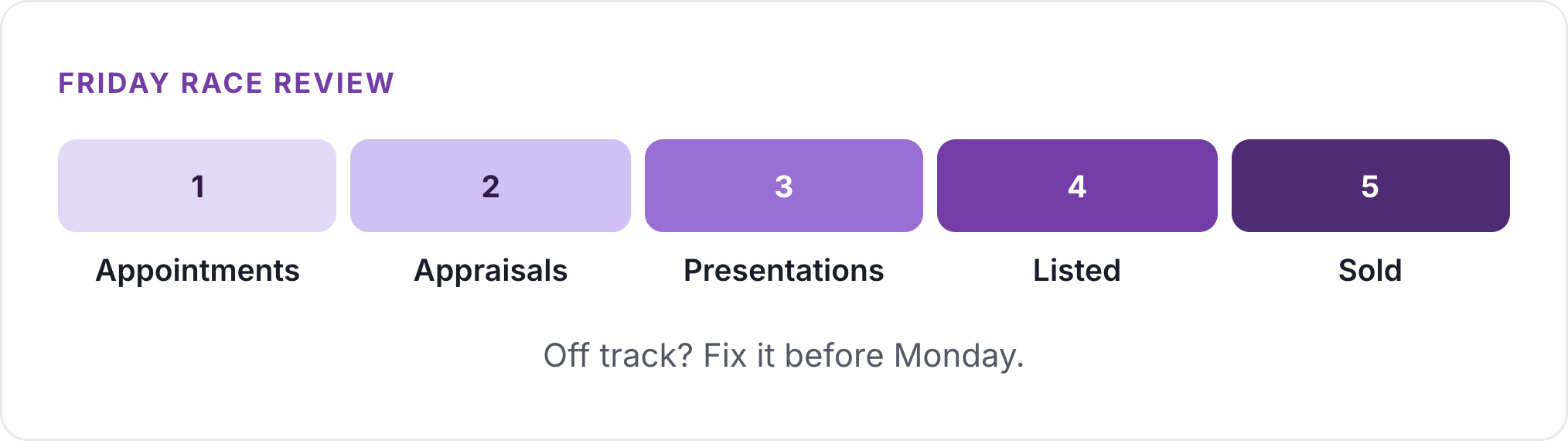
Wednesday, mark each listing on market red, orange or green. Red gets a vendor meeting with a reset menu: marketing, sale method, price. Friday, review the race like a Formula 1 team: appointments, appraisals, presentations, listed, sold. Off track? Fix it before Monday.
-
Turn each morning's market changes into reasons to call
Start the day with a short directions meeting covering what's been listed, sold, reduced and withdrawn. Each one is a reason to call. A withdrawn listing is a vendor who still wanted to sell. A new listing is news the neighbours want to hear. Close the afternoon with a 3pm loop back to check what happened.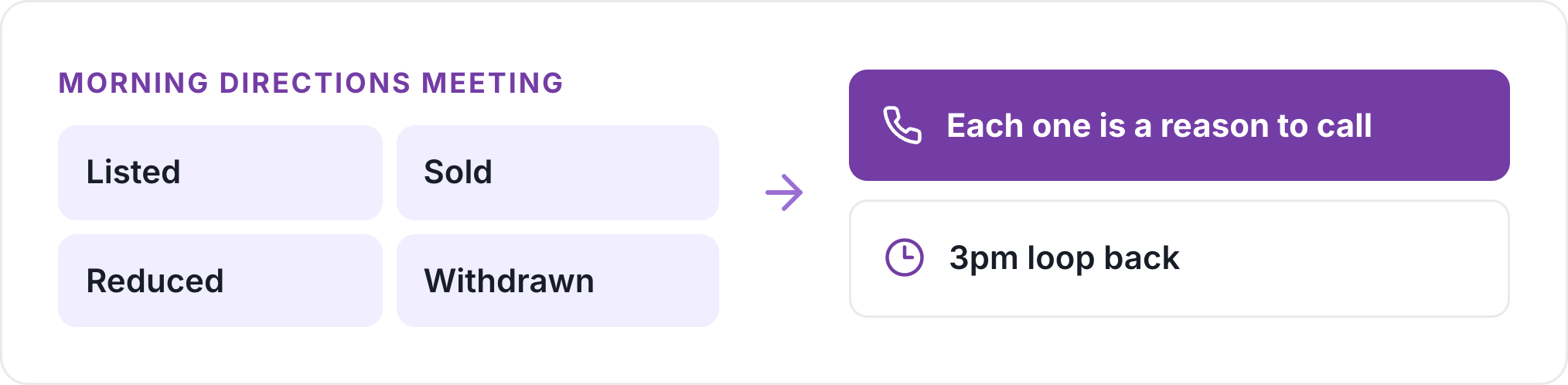
The two problems even a good routine can't fix
Even agents running this rhythm can stall. Sometimes it isn't discipline. It's whether the list underneath the routine can be worked.
You can't tell effort from skills until the month is over
Most leaders find out whether an agent has an effort problem or a skills problem only when the month's result lands.
Market changes give you an address, not a number
Each morning hands you addresses: the withdrawn listing on Smith Street, the five homes beside this week's new listing. A reason to call is only useful if you can reach the person connected to that address before another agent does.
What changes when the list behind your week is reliable
When an address is enough to start a conversation, the routine gets easier to keep.
Here's what that looks like.
How iD4me helps you run your weekly routine
A routine is only as good as the call list it produces. iD4me turns the morning directions meeting into one.
-
Call expired and withdrawn vendors. They already wanted to sell. Search the address, get a mobile and an email for the person connected to it in one search, and call while the campaign is still front of mind.
-
Keep Tuesday's seller list workable. Search old appraisals by name, address or phone instead of trusting notes from eighteen months ago. It's consented data, collected legitimately, with a record of how, so you have an answer when a vendor asks where you got their number.
-
Do Not Call Register status before the call. Green means the number was checked and wasn't on the register as at that date. Red means it's listed. Amber means it hasn't been checked yet. You see it before you dial, and how you handle it is your call.

Why a weekly routine wins a slow market
A weekly routine wins because results follow structure, not effort. Agents who give each day a job keep calling when the market goes quiet. Agents waiting for the phone don’t.
So hold the standard: from the moment the car leaves the garage until it’s home again, you’re either on the phone or in front of a customer.
Elections, legislation and market weather will come and go.
Your routine is the part you control, and if you’re going to back someone this season, back yourself.
Get Josh Phegan's full playbook for What to Do When Markets Shift: A weekly rhythm for a slower market
Watch the full episode