

Half your office is waiting for the phone to ring. The other half is on it from 8am. In a quiet market, that gap between your agents gets wider each week, and it doesn't show up in your numbers until the month is already gone. That's the real challenge when you lead a real estate team through a slowdown.
It's not a motivation problem. It's a visibility problem. Listings are ageing, appraisals aren't converting, and you can't easily see who's doing the work and who needs a push.
This blog draws on episode 2 of Josh Phegan’s series: What to Do When Markets Shift - How to lead your team through a slowdown. It covers the habits top leaders run, where they break down, and what changes when the whole office prospects with the same tools.
How top leaders lead a real estate team through a slowdown
Top leaders measure honestly, give their agents options, and hold the standard. It comes down to three habits.
-
Measure total listings on website and days on market
The two numbers that matter most in a slowdown are total listings on website and how many of those listings are under four weeks old. Total listings tells you whether you have enough stock. Listing age tells you whether it's selling.
Days on market is the enemy of a high-performing team. A listing that's been on for four or five months is decaying: the price is off, the marketing is tired.
-
Rescue red listings with a campaign reset menu
A campaign reset works when the vendor gets options, not an ultimatum. Traffic-light the whole business first: green is on track, orange is a wrestle, red won't sell as it is.
Then go with your agent to see the owners of the red listings. Bring a menu with three choices: new marketing, a different sale method, or a price adjustment. Options turn a hard conversation into a reset.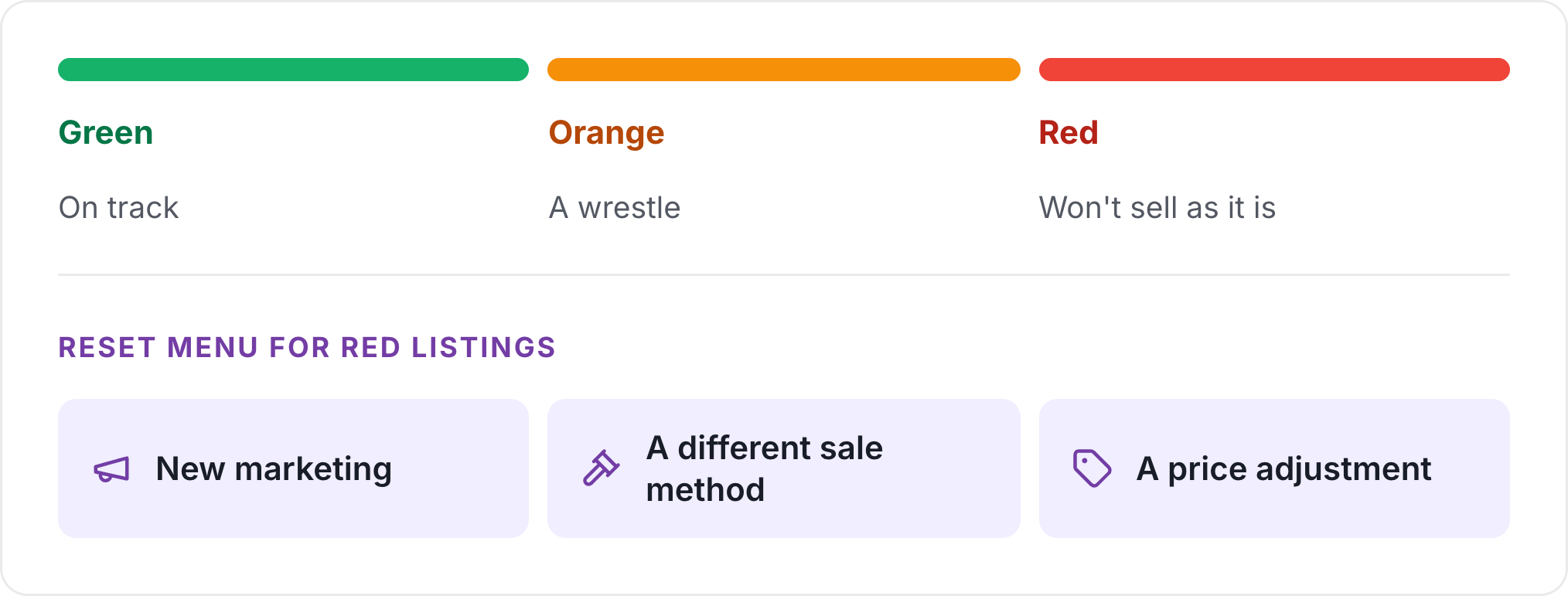
-
Hold campaign standards and arm the team with reasons.
Clear standards keep agents and vendors engaged when the market won't. Set them as non-negotiables: exclusive listings, vendor-paid marketing, weekly vendor meetings for the first three to four weeks, offers in writing, a second appointment by day 9, an offer by day 14, and the agency agreement re-signed at day 60.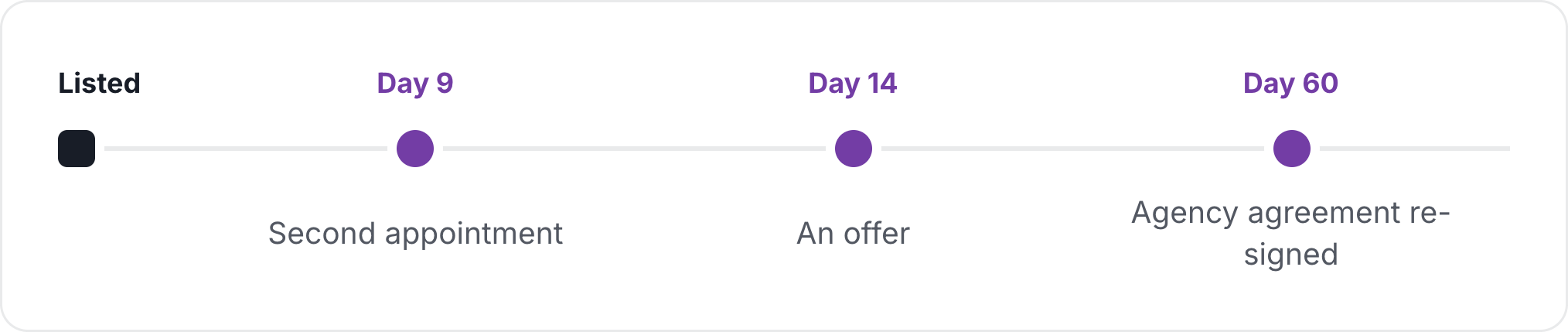
Then build a buy and sell chart together. It's a simple two-column list: reasons to buy now on one side, reasons to sell now on the other. On the buy side, there are fewer buyers competing for the same home, and much of Australia's property is selling for less than it would cost to build today. On the sell side, there are fewer homes competing for buyers now than there will be later, and a smaller price gap for owners who want to upgrade. Each point gives your agents a ready-made reason to call.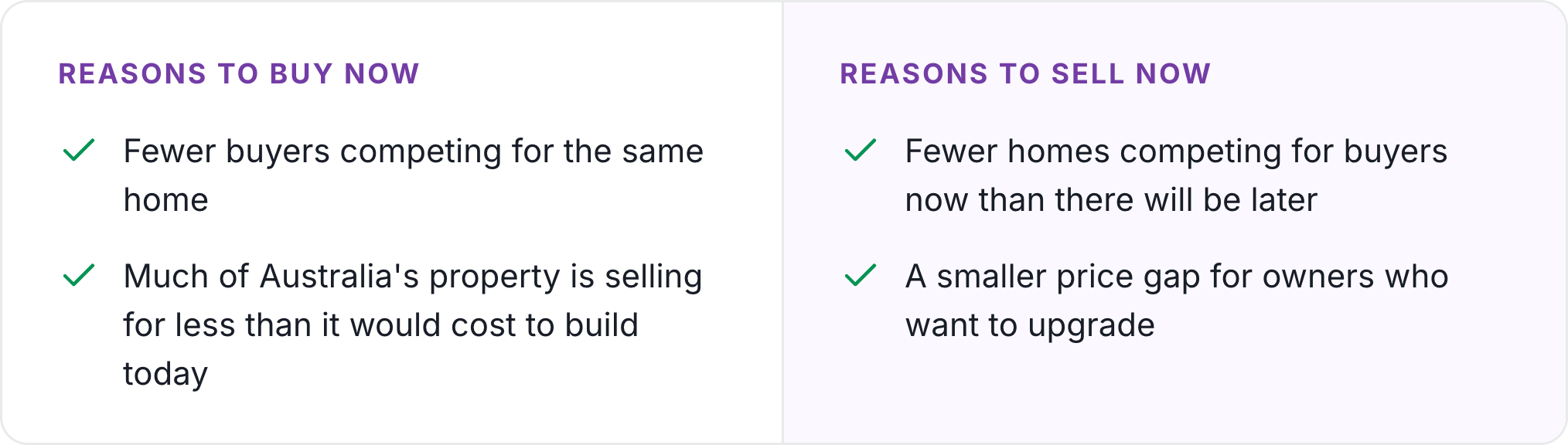
Then use the chart in the listing presentation. Ask the owner how they think the market is going, show them what's changed this year, and explain exactly what your office is doing about it.

The two problems even good leaders can't fix in a slowdown
Even leaders running all three habits can lose ground. Usually it's because they can't see the prospecting happening until the results are already in.
You can't tell effort from skills until the month is over
Most leaders find out whether an agent has an effort problem or a skills problem only when the month's result lands. 
A skills gap needs training, and sounds like "I don't know how to present this offer". An effort gap needs leadership, and sounds like "I tried that once". Either way, stay human: connect with your people, cut negative thinking fast, and celebrate the small wins.
Farming areas go quiet and nobody notices
When each agent prospects from their own spreadsheet, a farming area can go untouched for weeks and nobody in the office knows. It just stops producing appraisals, and the gap shows up months later as missing listings.
New starters have it worse. They arrive with a patch and nothing to call.
What changes when the whole office prospects with the same tools
When the team prospects from one source, leading gets clearer.
How the iD4me Team Plan helps you lead through a slowdown
In negotiation, timing is leverage. The underbidder you reach tonight is worth more than the one you reach next week.The common thread is visibility. You can't lead what you can't see. The iD4me Team Plan puts the same prospecting tools in each agent's hands, on one bill, with usage reports that show you who's actually making calls.
-
Coach from the numbers. Request usage reports for your team, last login dates included, so you know who's pulling their weight before it shows up in your results
-
See whose patch has gone quiet. Each agent works their own patch on their own login, and usage reports show you whose patch isn't being called. Each patch has someone accountable for it, and you can see which ones are being worked.
-
Do Not Call Register status before the call. Each number shows its own DNCR status, so you know where you stand before you dial.
-
One standard across the office. Every agent sees DNCR-flag. Check before you dial. Each record is traceable to source, so your agents have an answer when a vendor asks where they got their number, and every login is approved before access.
You bring the leadership.
The iD4me Team Plan brings the visibility, so you can coach and course-correct early, before a quiet patch becomes a missed month.
The leaders whose team come through it
Good business comes back to people, strategy and execution. The right people, the right plan, and doing it well, week after week.
When you lead a real estate team through a slowdown, pushing harder isn't the answer. Measure honestly, offer options instead of pressure, and hold the line on standards when it matters most.
Get Josh Phegan's full playbook for leading through a slowdown. Watch Watch the full episode