

You've just walked out of a listing presentation. The vendor nodded along, thanked you for your honesty, then signed with the agent who quoted higher. Vendor price expectations are still set by last season's market, and you're the one paying for it.
It's not a pricing problem. It's a timing problem. Vendor price expectations, the price a seller believes their property will achieve, are usually anchored to past sales, headlines or a neighbour's result rather than today's buyers. The market has already moved on. In a good market the phone gives you a reason to call. Now you have to bring one.
This blog breaks down how top agents handle vendor price expectations, drawing on our What Your Vendor Doesn't Know Yet session with Louis Christopher of SQM Research and Tom Panos: the habits that work, where they still fall apart, and what changes once you can reach the vendors other agents have stopped calling.
How top agents handle vendor price expectations
Top agents close the gap on price with evidence and process, not persuasion. It comes down to three habits, done consistently.
-
Bring the market's number, not your opinion
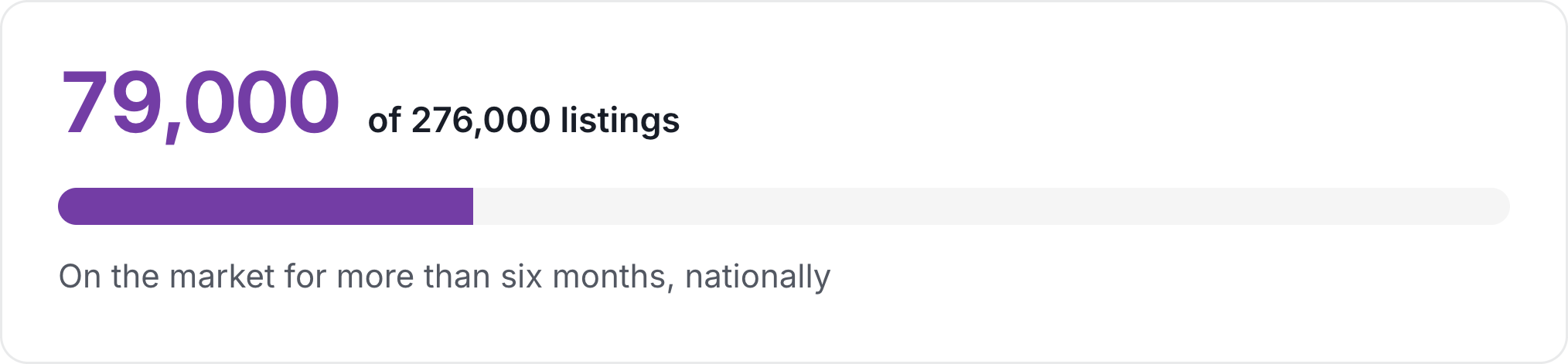
Know your suburb's total listings and days on market before you walk in. SQM Research publishes both for free. Louis Christopher's read at the end of October 2026 was simple: vendors have taken one step back on price, but buyers have taken two. Nationally, about 79,000 of 276,000 listings had been on the market for more than six months. A vendor can argue with your opinion. It's harder to argue with the stock sitting unsold in their own street.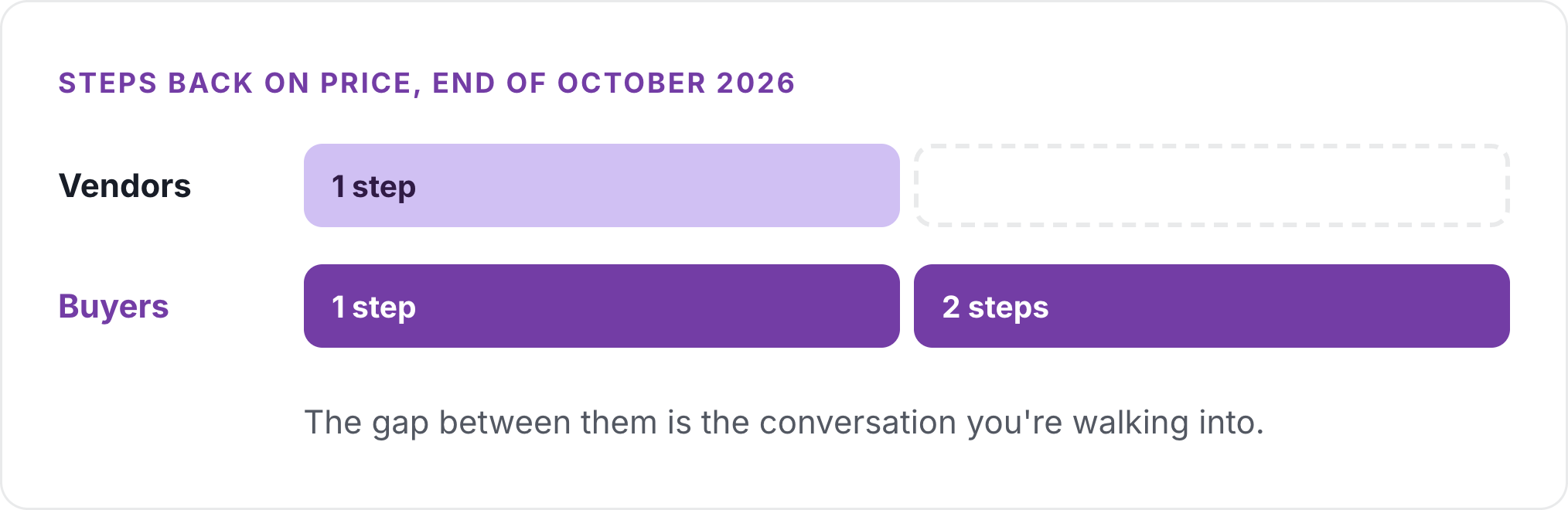
-
Sell the process, not the price
The best way to talk to vendors about price is to sell your process, not argue the number. Tom Panos's view is that vendors already know the market is hard, because they see it on their phone every few hours. Call their number ambitious rather than impossible, show the comparable sales, and make it clear that if a buyer exists at that price, you'll find them. No agent owns a buyer. Where trust is the sticking point, Tom suggests the vendor get an independent registered valuation.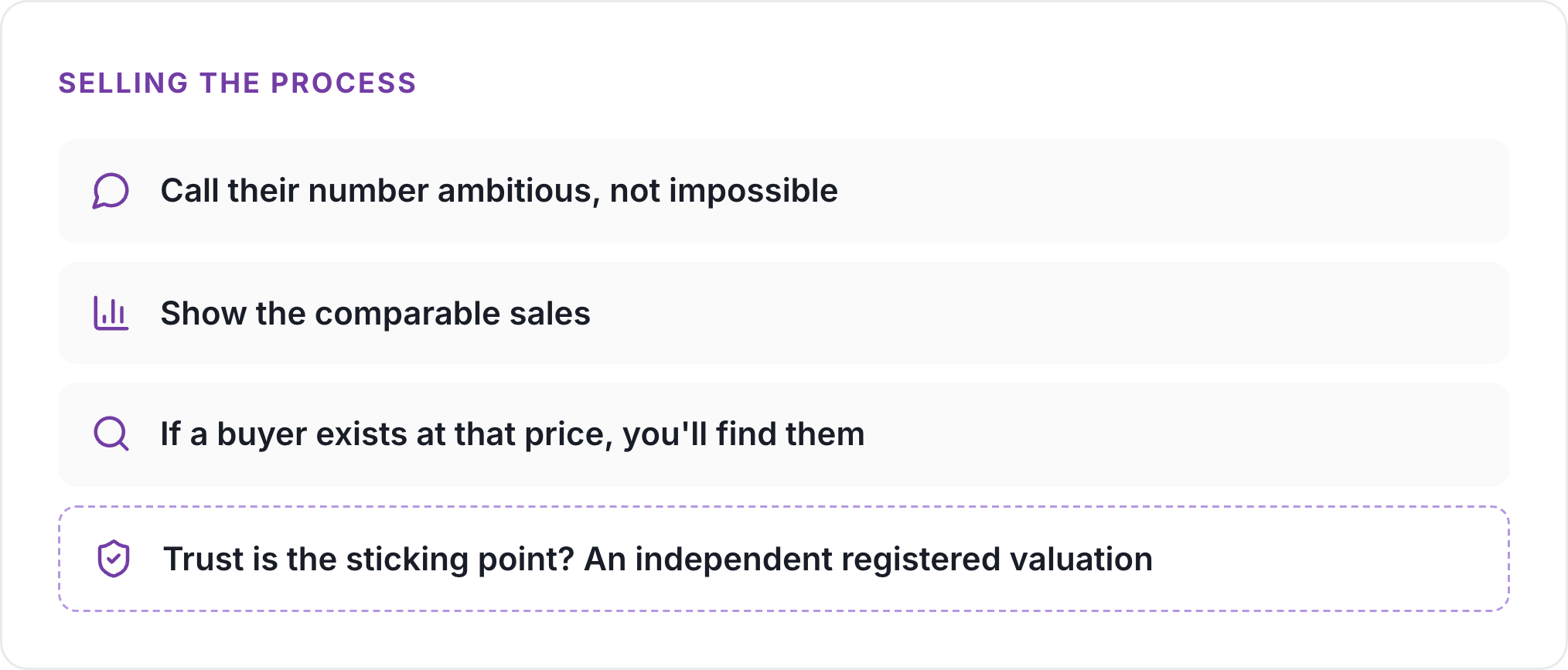
-
Keep calling while other agents go quiet
When volume falls, your share is the only lever left. Tom's maths: an agent doing 100 sales who grows their share enough to stay at 100 through a downturn is looking at around 143 when volume comes back. That share goes to whoever stays visible. His list of who to call is short: expired listings, stale listings and your own database.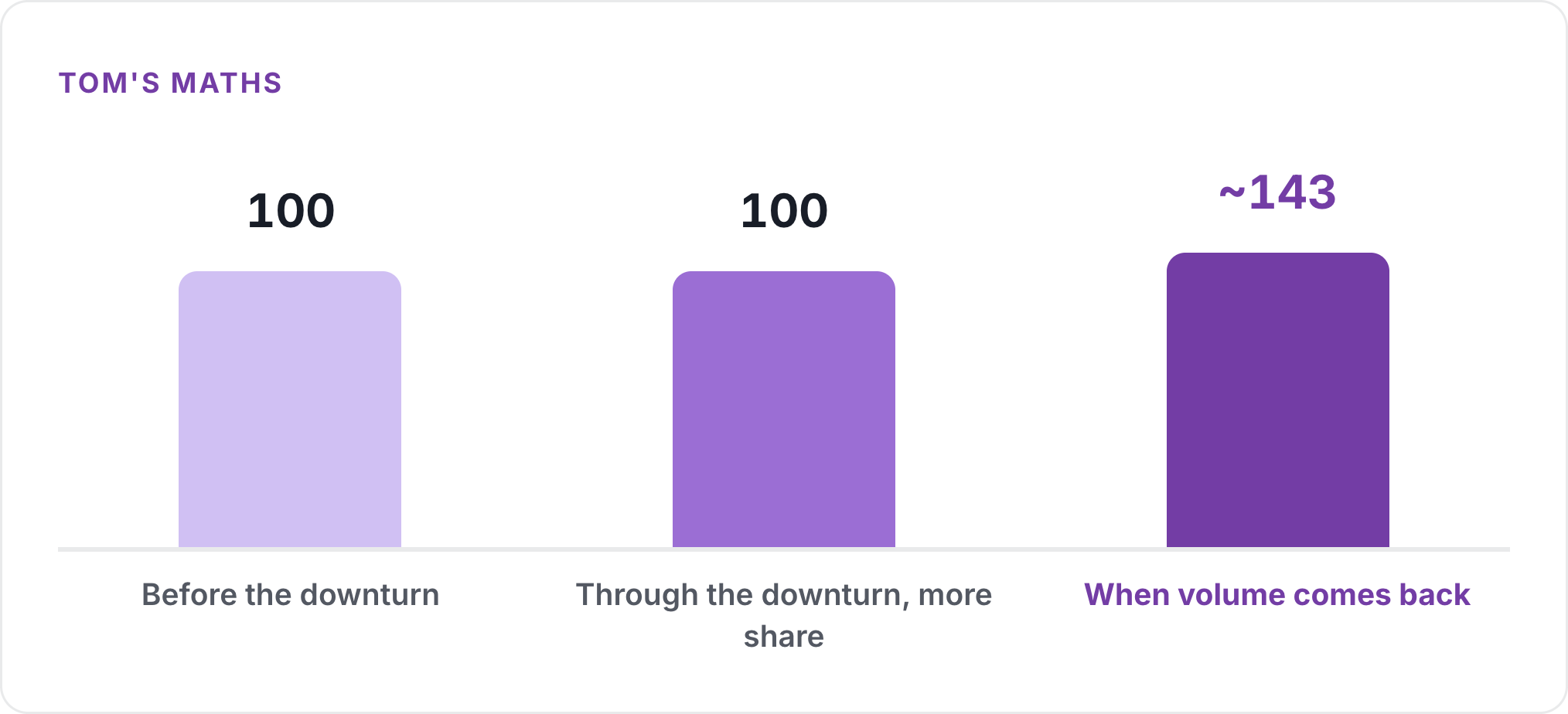

The two problems even good habits can't fix
Even agents running all three habits can stall. It isn't always discipline. It's whether they can reach the people those habits point to.
You know the listing, not the person
A withdrawn listing gives you an address, not a phone number, and the agent who listed it isn't sharing. Louis flagged a rise in withdrawn and rescheduled auctions, and plenty of six-month listings will be pulled before they sell. Those owners already wanted to sell.
Old details quietly stop working
Your past appraisals are your warmest leads. The vendor who wasn't ready last spring may be ready now. But people move and change numbers, so an appraisal list you worked eighteen months ago can go quiet without telling you why.
In a quiet market, a dead number is a conversation you never knew you lost.
What changes when you can reach the person behind the address
You stop waiting for the market to hand you a reason to call. Here's what that looks like.
How iD4me helps you reach vendors before the market moves again
The common thread is the six-month listing: you can see the address, you just can't reach the person. That's the gap iD4me closes.
- Search the house, reach the person. You know the address of that stale or withdrawn listing. Search it, and get a mobile and an email for the person connected to it in one search. See how iD4me Search works
- Know before you dial. Every record shows its Do Not Call Register status. You see it before you dial, and how you handle it is your call.
- An answer when the vendor asks. We hold a source trail for every person in our database, so you have an answer when a vendor asks where you got their number.
It won't change the vendor's mind about price. Louis' numbers and Tom's process do that.
It just makes sure you're the agent in the room when they're ready to listen.
The agents still taking listings when this market turns
Bring the market's number, sell your process, and keep calling while others go quiet. That's the agent vendors come back to when last season's price stops making sense, and the one still standing when the market turns.
If you want to see this system run in full, What Your Vendor Doesn't Know Yet with Louis Christopher and Tom Panos is worth the hour.