

You're in a lounge room in Melbourne. The appraisal has gone well. Then the vendor says it: "We might just wait until after the election." If you've never worked through one, selling property during an election can feel like selling into a pause button.
It isn't. Victoria goes to the polls on Saturday 28 November 2026, and whoever wins, the sun comes up the next morning. The hesitation is real, but it's fog, not a wall. And with the AFL Grand Final and the Melbourne Cup already squeezing spring, the Victorian calendar can't afford to lose five to seven more weeks.
This blog draws on episode 5 of Josh Phegan's What to Do When Markets Shift, Don't let the election stall your pipeline. It covers what top agents do before, on and after polling day, where they still fall short, and what changes when you can reach the street fast.
Can you keep selling property during an election?
Yes. An election makes buyers and vendors hesitate, but it doesn't stop property selling. The agents who keep listings moving treat the vote as weather, not a reason to stop.
You'll hear the objection three ways. Vendors want to wait until it's over. Buyers want to know who's in. And agents say offers are soft because of the election. All three are objections, and the last one is an excuse. 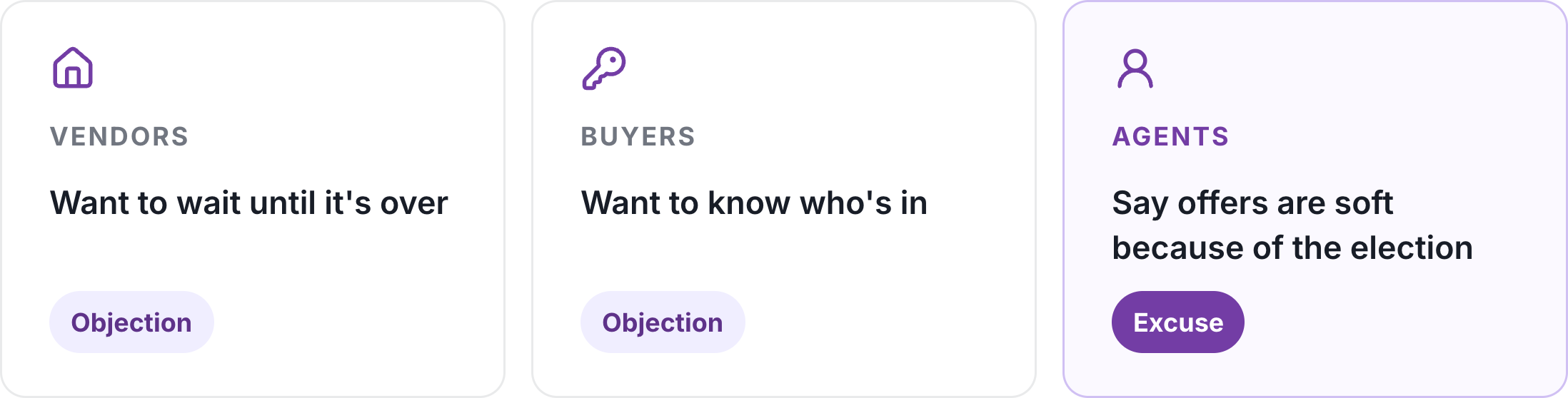
How top agents keep selling property during an election
Top agents split the election period into three stages: before the vote, election day itself, and the weekdays around it.

-
Before the vote: get control of the listing, then give advice
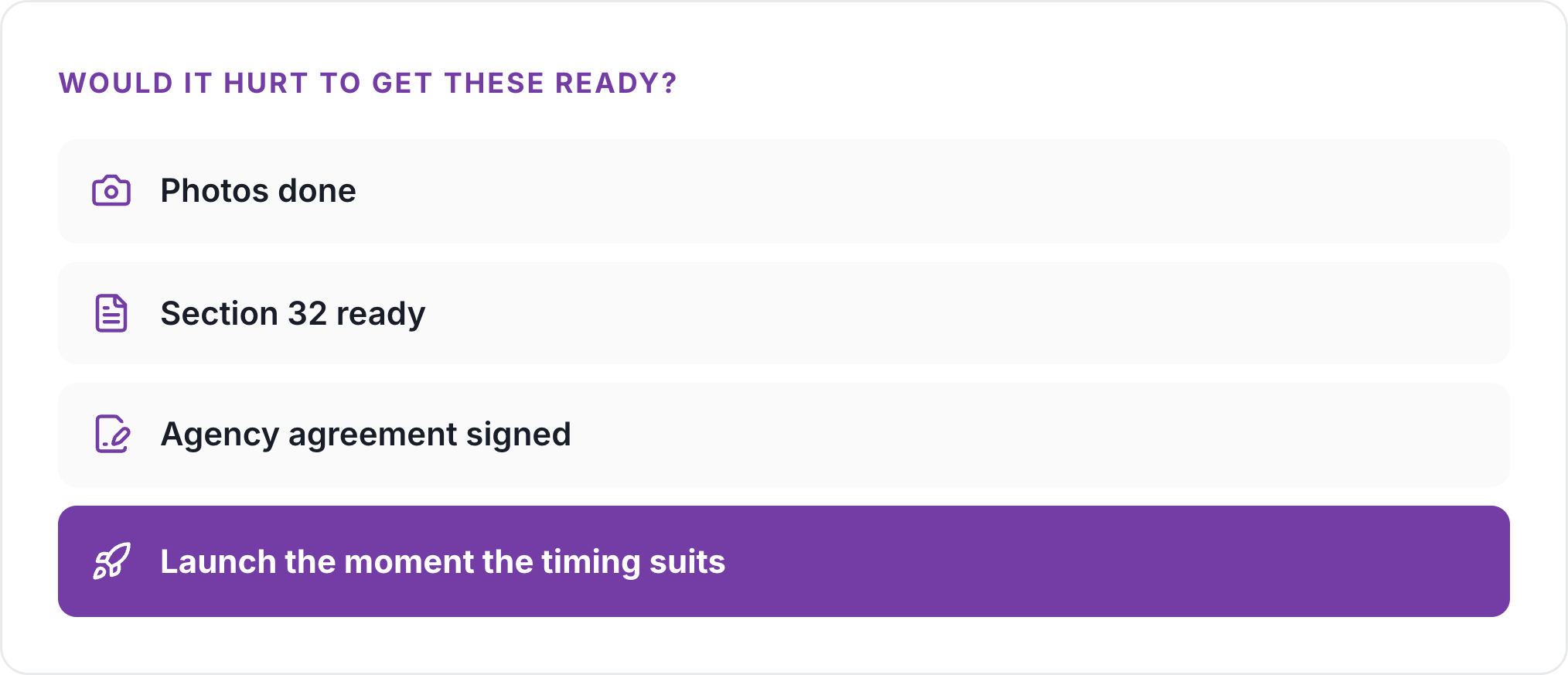
When a vendor wants to wait, don't argue and don't oversell. Ask whether it would hurt to get the photos done, the Section 32 ready and the agency agreement signed. If a buyer turns up, great. If not, you launch the moment the timing suits. Get control, then give advice.
-
On election day: use the crowd instead of fearing it
Voting is compulsory in Australia, so election day puts more people on the street than almost any other Saturday: school halls, sausage sizzles, people walking the neighbourhood. Run a structured campaign with an auction date set before the vote, or even on the day itself. Domain’s analysis of the past seven federal elections found auction numbers roughly halve on election day, yet the auctions that go ahead clear at a slightly higher average rate (60.4%) than the Saturday before (59.5%) or after (59.8%). If the home is near a polling place, put out an open board and see who walks in.
-
Around the vote: sell Monday to Friday while others wait for Saturday
Get back on the phones midweek. Book quality buyer appointments, ring the buyers who paused, and find the vendors who'd benefit from being on market now: less competition, a polling place down the road, buyers who want to settle before Christmas.
The two problems even well-prepared agents can't fix
Even agents running all three habits can lose ground. Usually it's because the people they need are known, but not reachable.
-
Election-day visitors disappear after the open
A busy election day open home brings people you'd never see on a normal Saturday: neighbours, locals on their way back from voting, the friend who's been wanting to move into the street. Most leave with a smile and a half-filled sign-in sheet. By Monday, they're a first name and nothing else.
-
Market changes give you an address, not a number
An election-day open near a polling place works best when the neighbours know about it. You know the addresses around your listing. What you don't have is a way to reach the people connected to them.
What changes when the list behind your week is reliable
When an address is enough to start a conversation, the election pause becomes a pipeline.
Here's what that looks like:
How iD4me helps you run through an election
Election day is the one Saturday the street comes to you. iD4me helps make sure the street knows, and that you can follow up afterwards.
-
Work the neighbours before the vote. Search the addresses around your listing and get a mobile and an email for the person connected to each in one search. Let them know the home is open on the day. Today's curious neighbour is tomorrow's vendor.
-
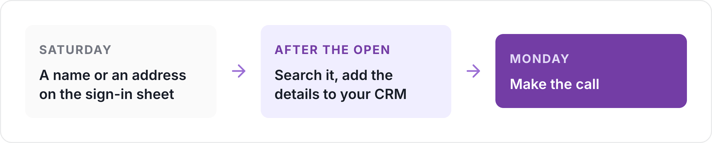
Make the call, then add them to your database. When a visitor leaves only a name or an address on the sign-in sheet, search it after the open and add the details to your CRM before election-week noise buries them.
-
More than 19 million Australians in one database. Every record shows its own Do Not Call Register status, so you see it before you dial, and how you handle it is your call.
The election is still the market's favourite excuse.
iD4me just helps turn it into your busiest Saturday.
Will property prices change after the election?
Not overnight. Prices won't boom or collapse the week after the vote, whichever way it goes. If you think things lift by Christmas, a prepared listing lets you move first. If you think it's a long, flat stretch, you haven't lost months waiting for a lift that doesn't come. And for vendors upgrading, trading near the bottom of the cycle means getting into the better home before the recovery, not after it. 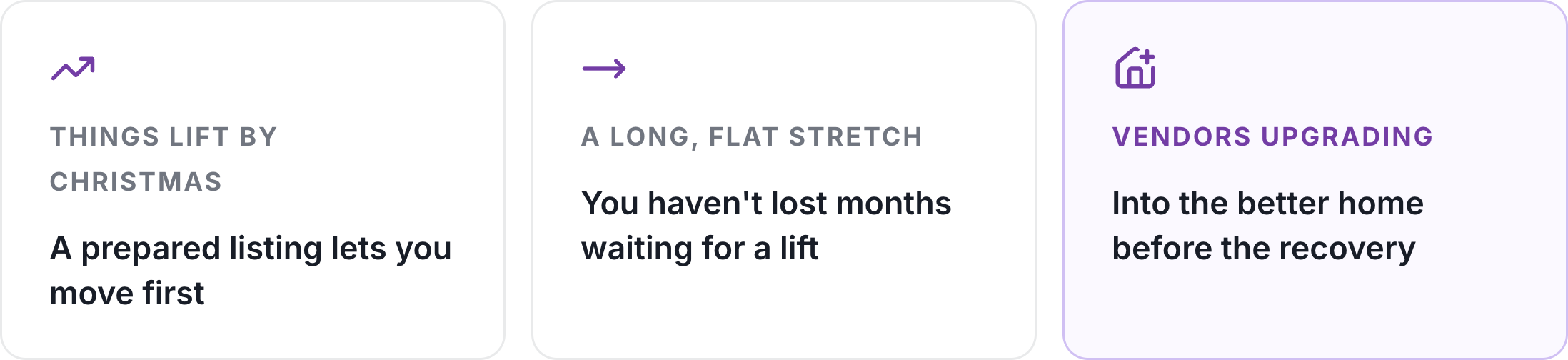
Either way, the agents who keep selling property during an election are the ones who adapt, tell a clear story about why now, and keep control of their listings.
Get Josh Phegan's full playbook for What to Do When Markets Shift: Don't Let the Election Stall Your Pipeline: Watch the full episode