.png?width=200&height=94&name=Logo%20-%20Violet%20(4).png)

You've already had this weekend. Good listing, sharp photos, fair price, six people through the door, and one of them says they'll wait until prices drop further. In a busy market, buyers find you. In a slow one, nobody rings to tell you who's ready. You have to find them and give them a reason to move now.
This guide draws on Episode 1 of Josh Phegan's series What to Do When Markets Shift.
How do top agents find buyers in a slow market?
They go to buyers before launch rather than waiting for the open. Three habits, done every listing.
-
Ring last year's buyers before the listing goes online
Your best buyers for a new listing have usually walked through something like it already. Pull up the last 12 months of comparable campaigns: everyone who enquired, inspected, came back for a second look, made an offer or bid. Ring them before launch and ask if they've bought yet.
Don't push them to Saturday. Book a private appointment for tomorrow at 2pm, then list a 2pm open on the portals so buyers with alerts set get notified. By the first open, you're running second looks, not first ones.

-
Call the buyers already sitting in your CRM
"There are so many buyers that are disguised as previous market appraisals and past clients that are sitting on the inside of your CRM," says Josh Phegan.
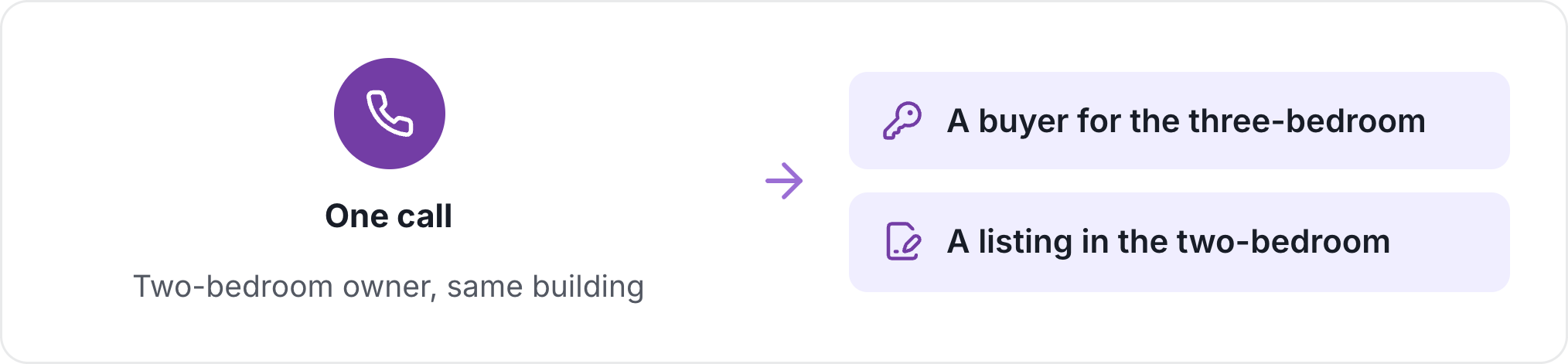
List a three-bedroom apartment and ring the two-bedroom owners in the same building. If one loves it, you've found a buyer for the three-bedroom and a listing in the two-bedroom. One call, two transactions.
- Look for the buyer with a reason to want this exact property
Josh tells the story of a St Kilda agent selling a 1960s apartment wrapped in scaffolding, with a $20,000 special levy due within 70 days. Buyers drove straight past. Josh asked him to call the owners of the other 19 apartments instead. The agent didn't have their numbers, so he searched the owner of unit one on iD4me and rang him. The owner, an investor living in Hobart, bought it at full price that afternoon. He was never going to see it on a portal.

Why can't agents reach the buyers they find?
Because knowing the address isn't the same as having a number. Two gaps come up again and again.
You know the property, not the person
The St Kilda agent knew exactly which 19 doors mattered and had no way to call any of them. It's the same gap with owners in a building, neighbours of a new listing, or a buyer whose details weren't captured at the open.
Old buyer details stop working
After a price reduction, Josh's plan is to ring every buyer who has been through within 24, 48 and 72 hours. Many of those names came from opens over a year ago. People move and numbers change, and your CRM won't tell you.

What changes when you can reach the right buyer fast?
When you can see where a number came from and whether it is safe to dial, the experience of working the 6 to 24 month pipeline changes fundamentally, not incrementally. Here is what that shift looks like in practice.
How does iD4me help agents find buyers?
iD4me answers the question buyer work keeps coming back to: who's behind that door?
-
Search the property, reach the person. Search by address, name or phone and see the mobile and email on record for the person connected to it. See the Agent Plan
-
Refresh last year's buyers before a price change. Search the names from past opens and appraisals before the 24, 48 and 72-hour calls rather than relying on notes from a year ago.
-
Do Not Call Register status on every number. Green: checked and not on the register as at that date. Red: on the register. Amber: not yet checked. You see it before you dial.
It won't make the buyer say yes.
It gets you to the door other agents drove past.
Keep going
The agent down the road rarely outsells you. They just call first.
For Josh's full method, watch Episode 1 of What to Do When Markets Shifts.